
Carpet & Rug · October 6, 2026
Wool Carpet Cleaning: What Wool Needs That Synthetic Carpet Does Not
Wool carpet absorbs more water, reacts to high pH and heat, and can brown or bleed. What a safe cleaning looks like and what to avoid at home in Marin.
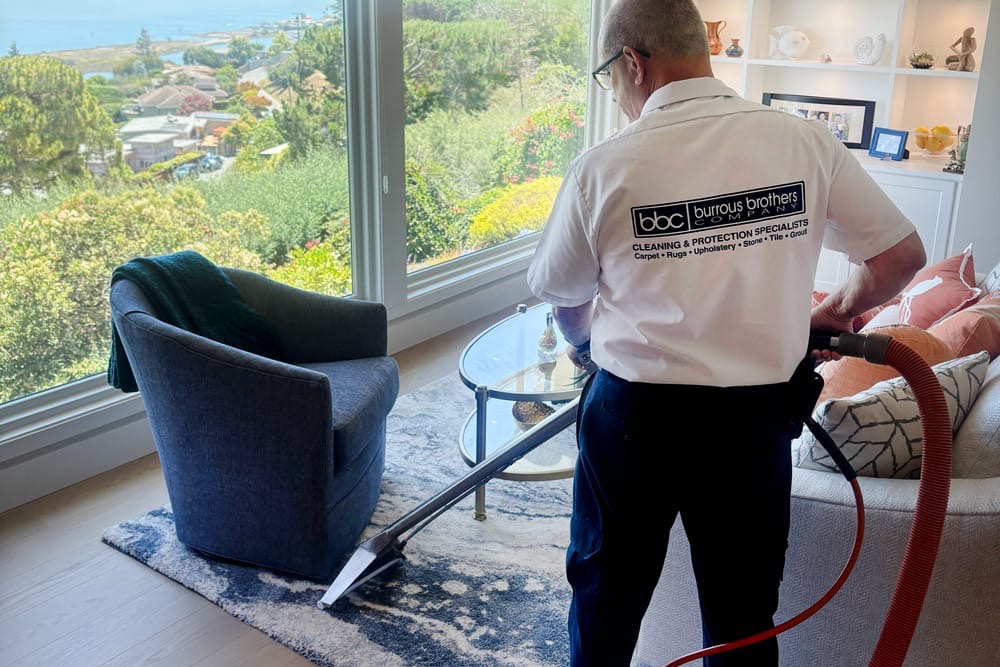
Wool wall-to-wall carpet is common in Marin’s older houses. There is a lot of it in the older stock around Old Mill and Blithedale Canyon in Mill Valley, and a lot more in Tiburon and Belvedere, where houses are built out of materials that punish a generic cleaning method. Wool lasts for decades and hides soil well. It also reacts badly to the method most carpet in the country is cleaned with.
Most modern carpet is nylon or polyester. Nylon and polyester tolerate stronger detergents and more water. Wool does not. Here is what is different, and what a safe cleaning looks like.
This post is about wall-to-wall wool. For wool area rugs and orientals, see why we clean wool and oriental rugs in your home.
Why wool behaves differently
Wool is a protein fiber, closer to hair than to plastic. Five things follow from that.
It absorbs water. A synthetic fiber holds water on its surface. Wool takes it into the fiber itself, so wool carpet holds far more water during cleaning and gives it up more slowly. More water in the carpet means more chance of everything else on this list.
It is sensitive to high pH. Many carpet detergents, and most household spot cleaners, are alkaline because alkaline products cut soil fast on synthetics. On wool, high pH can weaken the fiber, make it feel harsh, and shift the color. Wool is cleaned at a lower pH, and the carpet should be left pH balanced, not alkaline.
It does not like excessive heat. Hot water helps clean wool, but there is a limit. Too much heat, combined with moisture and agitation, can make the fiber felt, distort, or lose its texture.
Its dyes can bleed. Some wool carpet, particularly older carpet and carpet with strong reds or blues, releases dye when it is wet, and more readily when the solution is alkaline. A dye that bleeds once leaves a halo or a pink cast on the paler fiber next to it, and that is very hard to undo.
It can brown. This one is less well known. When wool carpet is over-wet, water reaches the backing. Many older woven wool carpets have a jute backing, and jute is a plant fiber that releases brown residue when it is wet. As the carpet dries, the water wicks up through the pile and leaves that residue at the tips, so the carpet looks tea-stained a day or two after the cleaning. Leftover alkaline detergent makes it worse. The fix is mostly prevention: less water, faster extraction, and a carpet that dries quickly.
There is also a risk of shrinkage. Wool broadloom that is soaked can shrink as it dries, which pulls at the seams and the tack strip along the walls.
None of this means wool is fragile. It means wool is unforgiving of a method designed for nylon.
What a safe wool carpet cleaning looks like
On a wool job we change the process at every step.
- Identify the fiber. We confirm the carpet is wool, and check the construction and the backing, before quoting the job. A wool blend, a wool carpet on a jute backing, and a wool carpet on a synthetic backing each need a slightly different approach.
- Test the dyes. Before anything gets wet, we test dye stability in an inconspicuous spot, usually inside a closet. If the dye moves, we change the method or tell you plainly that the carpet should not be wet-cleaned that day.
- Match pH, temperature, and moisture to the fiber. A milder pre-spray, lower pH, controlled heat, and only as much moisture as the cleaning needs.
- Treat spots individually. Spots on wool are treated with a method suited to a protein fiber, not the general-purpose approach used on a synthetic.
- Rinse thoroughly. A hot rinse extracted immediately by the truck-mounted unit, so the carpet is left pH balanced and essentially residue-free. Residue is what makes wool feel stiff and resoil quickly.
- Get it dry fast. Truck-mounted extraction pulls out most of the moisture before it reaches the backing. We extract thoroughly and set air movers where the room needs them. Because wool holds more water than a synthetic, it tends to sit at the longer end of a typical dry time, and shaded houses take longer still. There is more on that in how long carpet takes to dry in Marin.
After cleaning, fiber protector is worth considering on light-colored wool and in traffic lanes. Protector buys time to blot before a spill becomes a stain, and it wears off with traffic, so it is re-applied at cleaning rather than once for life.
What to avoid at home
Most of the wool damage we see did not come from a professional. It came from a well-meant afternoon with a bottle from the hardware store. On wool carpet, avoid:
- High-pH and alkaline spotters. Read the label. Many all-purpose carpet sprays are alkaline, and so are ammonia-based cleaners.
- Bleach and oxygen-based stain removers. They can strip dye and weaken the fiber, and on light wool they can leave a yellow patch that is permanent.
- Over-wetting. Pouring water on a spill and scrubbing it pushes the problem into the backing. Blot with a clean white cloth, use a small amount of plain water, and blot it out again.
- Rental machines. They put down a lot of water and do not have the vacuum to take it back out. On wool that means a long, damp dry, a real risk of browning on a jute backing, and detergent left in the pile. It is the most common story behind a wool carpet that looked worse after it was cleaned.
- Scrubbing. Wool fibers distort and fuzz when rubbed wet, and that change does not come back.
What does help: vacuum regularly, slowly, and in both directions, because wool hides grit well and grit is what wears it out. Blot spills quickly. If a spot does not come out with plain water, leave it for us rather than escalating to a stronger product.
How often wool carpet should be cleaned
On the same schedule as any carpet: every twelve to eighteen months for most homes, closer to twelve for traffic lanes in a busy house. Wool’s habit of hiding soil is the reason not to wait. By the time a wool traffic lane looks grey, the grit at the base of the pile has been cutting fibers for a long time.
What to do next
Text us a photo of the carpet and, if you can get one, a photo of an edge or the back at a closet or floor vent. The fiber and the backing decide the method. Estimates are free and the estimate is the price.
More on the process is on our carpet and rug cleaning page, or ask for a free estimate directly.
Frequently asked
Can wool carpet be steam cleaned?
Yes, with the method adjusted for wool. What most people call steam cleaning is hot water extraction, and it is safe for wool carpet when the pH, temperature, and amount of moisture are matched to the fiber and the water is extracted quickly. The damage people associate with cleaning wool comes from over-wetting, harsh alkaline detergents, and too much heat, not from extraction itself.
What should you not use on wool carpet?
High-pH or alkaline spot cleaners, bleach, oxygen-based stain removers, and ammonia. Wool is a protein fiber, and those products can weaken it, strip dye, or turn a light carpet yellow. Avoid soaking a spot, too: too much water is its own problem on wool.
Why did my wool carpet turn brown after cleaning?
Usually because it was over-wet. When water reaches the backing, especially a jute backing, it can carry brown residue up to the tips of the pile as the carpet dries. Leftover alkaline detergent makes it more likely. Extracting the water quickly and drying the carpet fast is what prevents it.
How long does wool carpet take to dry?
Wool holds more water than synthetic fiber, so it tends to sit toward the longer end of a typical four-to-eight-hour dry time. Shaded or damp houses take longer. We can set air movers where it matters, and we will give you a realistic dry time before we start.
How do I know if my carpet is wool?
Check the paperwork from the installation or the label on a leftover remnant if you have one. Otherwise, text us a photo of the carpet and of an edge or the back at a closet or a floor vent. We confirm the fiber at the estimate before anything gets wet.
Related reading
Carpet & Rug
How Long Does Carpet Take to Dry After Cleaning? A Marin Guide
Truck-mounted cleaning usually leaves carpet dry in four to eight hours. What stretches that in Marin, how to speed it up, and signs carpet is not drying right.
Read the postCarpet & Rug
How Often Should You Clean Carpet? A Schedule for Marin Households
How often carpet needs a professional cleaning depends on what walks across it. A plain schedule by household, from quiet homes to dogs, trails, and fog.
Read the postCarpet & Rug
Wool and Oriental Rug Cleaning in Marin: Why We Clean Them in Your Home
Most wool and oriental area rugs can be cleaned safely on location, without a pickup, a plant, or a two-week wait. How we decide which rugs qualify, what the process looks like, and when to send a rug out instead.
Read the postReady for a cleaner home?
Call or text us for a free, no-pressure estimate. We’ll give you an honest assessment of what your space needs, and what it doesn’t, at an upfront price, with no surprises.