
Carpet & Rug · October 21, 2026
Steam Cleaning vs. Dry Cleaning Carpet: What the Names Actually Mean
Steam cleaning, dry cleaning, hot water extraction, bonnet, encapsulation: what each carpet cleaning method really does, and what to ask before you book.
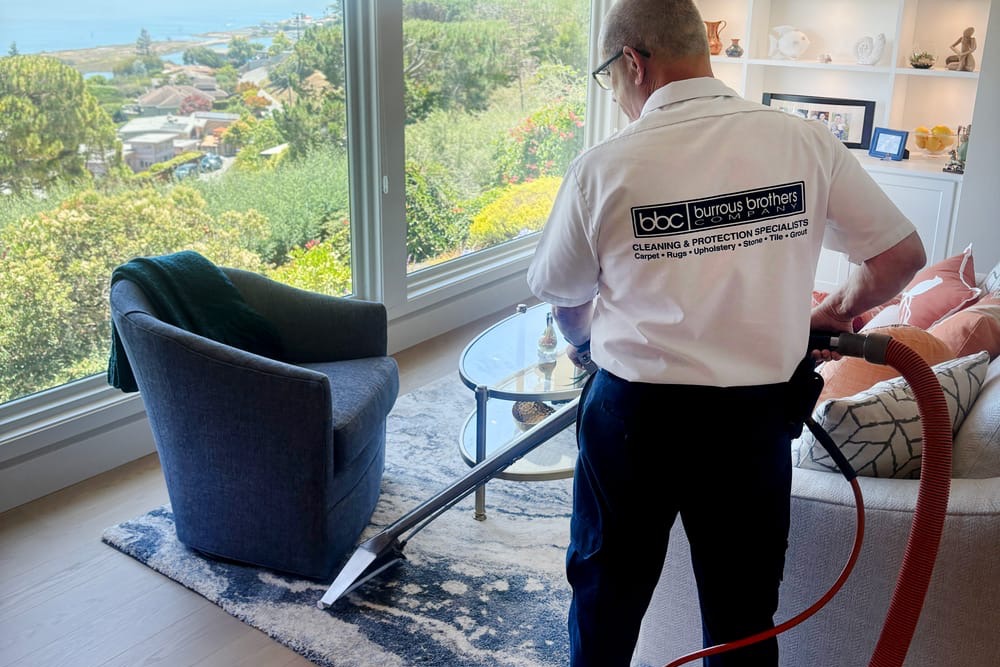
Carpet cleaning is one of the few trades where the method has three names and every company uses a different one. “Steam cleaning,” “deep cleaning,” “hot water extraction,” “dry cleaning,” “low-moisture,” “encapsulation”: a customer comparing quotes is often comparing the same thing under two names, or two different things under one.
Here is what each term means, what each method does well, and what to ask so you know which one you are buying.
Steam cleaning is hot water extraction
This is the one that causes the most confusion. When most people say steam cleaning, they mean hot water extraction: hot water and a cleaning solution are driven into the carpet, then pulled back out by a powerful vacuum, taking the dissolved soil with them. The water is hot, and it is sometimes described as steaming, but no actual steam touches the carpet. Real steam would damage the fibers and the backing.
So when one company quotes “steam cleaning” and another quotes “hot water extraction,” they may be describing the same method. Our seasonal carpet guide covers the same point. The thing that actually separates one hot water extraction job from another is the machine.
Truck-mounted versus portable
A truck-mounted unit runs off the engine of a van, with the machine outside and a hose running into your house. A portable unit sits in the room, and a rental machine from a hardware store is the portable kind. Truck-mounted extraction pulls out far more moisture than a portable unit, which means a cleaner result, and a carpet that dries sooner. It also sends the dirty water out of the house entirely rather than into a tank that has to be carried through it.
This is the method we use at Burrous Brothers, and we rinse thoroughly, because detergent left behind keeps attracting soil. Done properly, the carpet is left essentially residue-free and pH balanced.
What “dry cleaning” carpet means
Carpet is not dry cleaned in the way a suit is, with solvent in a machine. “Dry carpet cleaning” is a family of low-moisture methods, and three show up most often:
- Dry compound. A damp, absorbent powder is worked into the carpet with a brush, then vacuumed up. The idea is that the compound attracts soil as it dries.
- Bonnet. A spinning pad soaked in solution scrubs the top of the pile, and the dirty pad is rinsed or changed. It cleans the surface, and it is more commonly used for commercial maintenance than for a deep clean.
- Encapsulation. A polymer solution is worked in and dries into crystals that trap the soil, and the crystals are vacuumed up later.
Each has a real advantage: very short drying time and little disruption. Each has the same limitation. None of them rinses. The soil is absorbed, crushed, or encapsulated and then vacuumed out, but whatever is deep in the pile stays where it was, and residue from the product can be left behind.
When the difference matters
For routine upkeep of a lightly soiled commercial carpet, low-moisture methods are a reasonable maintenance choice. In a family house, the question is different. A carpet that has taken a few years of grit, oils, pets, and spills is full of soil that is not on the surface. Flushing and extracting reaches that soil, and a method that only works the top of the pile does not.
Drying is the other side of the trade. Low-moisture methods dry in an hour or two, and extraction takes longer, typically four to eight hours with a truck-mounted unit, more in a damp house. Our guide on how long carpet takes to dry covers what moves that number.
Wool and delicate fibers
Whatever the method is called, wool needs the temperature, pH, and moisture matched to the fiber. Heat, high-pH products, and long wet times damage wool, and the damage is permanent. It is the fiber we are most careful with, and our wool carpet guide explains why.
Questions that separate one quote from another
Instead of asking which name a company uses, ask what is actually going to happen in your house:
- Is the machine truck-mounted or portable?
- Does the process include a rinse? Detergent left in the carpet is a common reason it looks dirty again in a few weeks.
- How long will it take to dry? A company that cannot give you a straight number for your house is guessing.
- Will it be matched to the fiber? This matters most for wool.
Next step
If you are not sure which method your carpet needs, text us a photo and tell us what has happened to it. We will tell you what we would do and why. Our carpet and rug cleaning page describes the process, and estimates are free on the contact page.
Frequently asked
Is steam cleaning the same as hot water extraction?
In everyday use, yes. What most people call steam cleaning is hot water extraction: hot water and cleaning solution go into the carpet and are pulled straight back out by vacuum. The part that matters is not the name but the machine, because a truck-mounted unit pulls out far more moisture than a portable or rental one.
Is dry carpet cleaning better than steam cleaning?
Not as a rule. Dry and low-moisture methods dry fast and suit some commercial jobs, but they do not rinse, so the soil is moved or absorbed rather than flushed out. For a lived-in family home, hot water extraction with a thorough rinse removes more.
Which method is safest for wool carpet?
Whichever method can be matched to the fiber. Wool is sensitive to heat, high pH, and long wet times, so the moisture, temperature, and pH have to be controlled whatever the method is called. We cover it in our wool carpet cleaning guide.
How long does carpet take to dry after hot water extraction?
Typically four to eight hours with truck-mounted extraction, longer in a damp house or on a foggy day. Our drying guide covers what moves the number.
Related reading
Carpet & Rug
Spill First Aid for Carpet and Upholstery: The First Ten Minutes
What to do in the first ten minutes after a spill on carpet or a sofa, what to avoid, and when to stop and call. Blot, do not rub, and skip the wrong product.
Read the postCarpet & Rug
What Goes Into a Carpet Cleaning Quote in Marin
What changes a carpet cleaning price in Marin: amount of carpet, fiber, condition, and access. How to read a quote and why an estimate beats a per-room price.
Read the postCarpet & Rug
Is Carpet Protector Worth It? What It Does on Traffic Lanes
Carpet protector is worth it on traffic lanes, stairs, light carpet, and wool, not in a room nobody uses. What it does, what it cannot do, and why it wears off.
Read the postReady for a cleaner home?
Call or text us for a free, no-pressure estimate. We’ll give you an honest assessment of what your space needs, and what it doesn’t, at an upfront price, with no surprises.