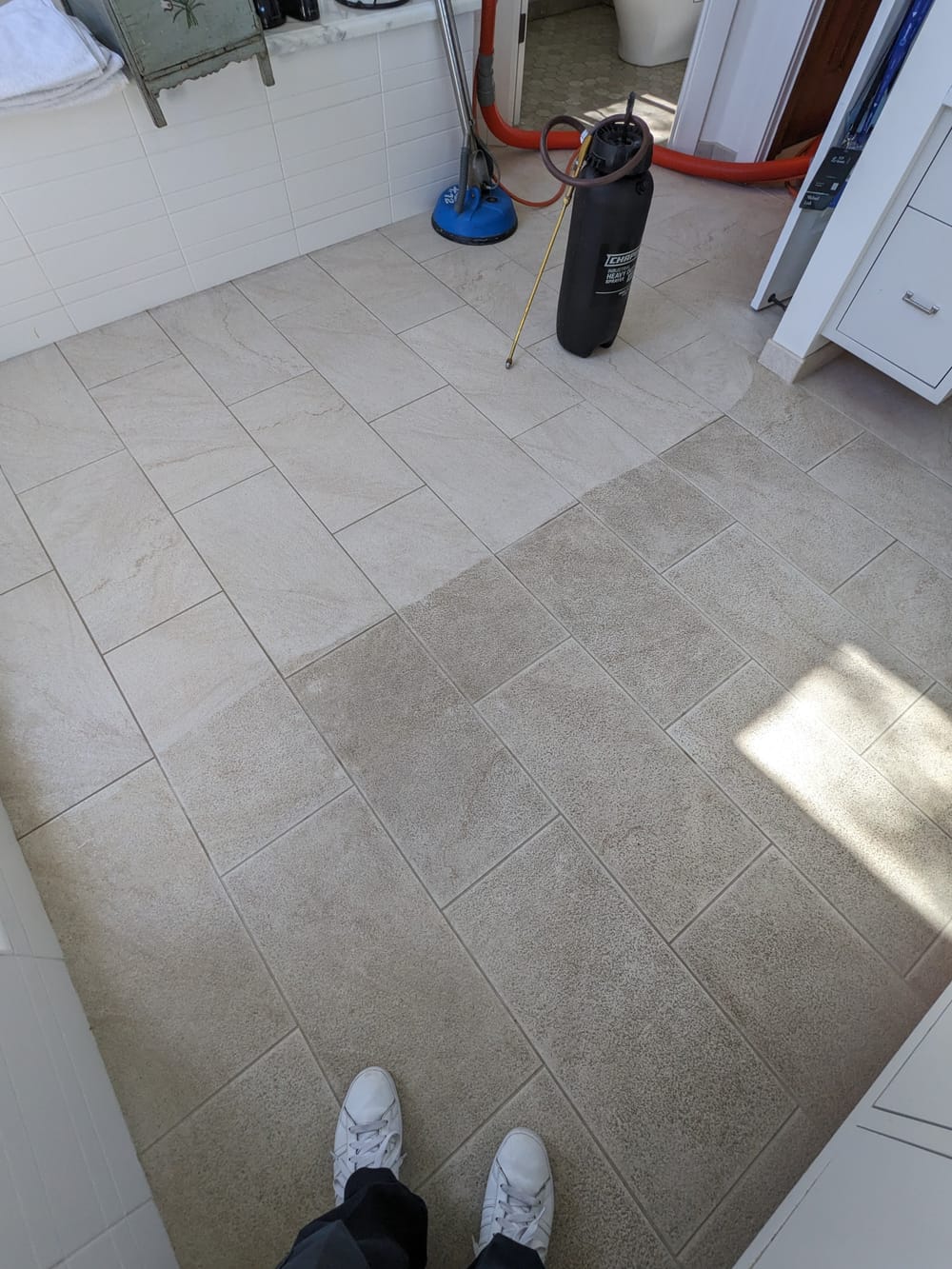
Proper care and maintenance of stone, tile, and grout
increases the longevity and beauty of these surfaces. Our
powerful truck-mounted hot water extraction
equipment gets deep into the crevices and pores. No
mop-and-bucket method can match it.
We use only the finest, safest, and most effective cleaning
products available. Your stone, tile, and grout will come
out cleaner and more sanitary than with any other method.
Surfaces we clean and seal
Natural stone
· Marble
· Limestone
· Travertine
· Sandstone
· Slate
· Granite
Tile & cementitious
· Ceramic and porcelain tile
· Grouted joints
· Terra cotta
· Saltillo
· Concrete
· Stucco
Sealing and protection
Most stone, all grout lines, and many clay/cementitious
materials are very porous. They’ll stain easily without a
protective sealer. We test sealers and application
procedures ourselves, so the protection you receive is the
best available for the surface you have.
Sealers should be applied shortly after installation and
reapplied every time we professionally clean the surface.
Typically, that means cleaning and resealing every two to
three years.
Care guide
How to take care of your stone, tile, and grout
Maintenance cleaning
Use a neutral pH cleaner formulated for the
surface. Products like StoneTech Professional™ All Purpose
Stone & Tile Cleaner gently lift everyday soil without
damaging your sealer.
Strong high-pH cleaners and household disinfectants can strip
sealers. Avoid general-purpose cleaners, vinegar, bleach,
ammonia, and any abrasives on natural stone.
Spill management
Wipe up spills promptly. Oils are particularly damaging, so be
quick with cooking oils in the kitchen and cosmetics in the
bathroom.
Acidic foods and drinks can etch or dull stone surfaces and
degrade sealers. Take special care with citrus, alcohol,
perfume, toothpaste, and mouthwash.
Daily protection
Sweep, dust, or vacuum floors regularly. Dry sandy soil can
scratch surfaces over time. Place small rugs or mats at
entryways to trap grit before it reaches your stone or tile.
Most homes benefit from a professional cleaning and reseal
every two to three years. For more on caring for natural
stone, see the Natural Stone Institute’s guidance.
In their words
What clients say about our stone work
“My marble entry cleaned up much better than I thought it would, it looks like new again. You did a great job!”
How often should tile and grout be professionally cleaned?
For most Marin homes, every two to three years. Kitchens, entries, and bathrooms in busy households can need it closer to every eighteen months. Grout is porous, so once soil works below the surface a mop pushes it around rather than lifting it out — that is the point where professional hot water extraction pays off.
Can you restore the color of my grout?
Usually, yes. Most grout that looks permanently dark is not stained through, it is holding soil in its pores. Truck-mounted hot water extraction lifts that soil out and typically brings the grout back several shades. Where grout has been dyed, damaged, or worn below the surface, we will tell you that at the estimate rather than after the job.
Do you seal stone and grout afterward?
Yes, and we recommend it on nearly every job. Most natural stone, all grout lines, and many clay and cementitious materials are porous enough to stain without a sealer. We test sealers and application procedures ourselves, so what goes on your floor is matched to the material. Sealing is best done right after a professional cleaning, while the surface is clean and dry.
How long does a stone, tile, and grout job take?
A typical kitchen or bathroom floor takes two to four hours. Larger areas, heavily soiled Saltillo, or stone that needs restoration take longer, and we will give you the time estimate along with the price before we start. Sealed surfaces are usually ready for normal use the same day.
Can you fix etched or dull marble countertops?
In most cases we can restore etched marble back to a uniform finish, then seal it. Etching is a chemical reaction between acid and the stone rather than a stain, so it needs a mechanical restoration, not a stronger cleaner. Send us a photo or let us see it at the estimate and we will tell you honestly what is achievable.
Will cleaning damage my natural stone?
Not with a method matched to the material. We use neutral-pH products and adjust pressure and dwell time by surface — marble, limestone, travertine, slate, granite, terra cotta, Saltillo, and concrete all behave differently. The damage we most often get called in to correct comes from household cleaners: vinegar, bleach, ammonia, and general-purpose sprays.
Call or text us for a free, no-pressure estimate. We’ll give you an honest assessment of what your space needs, and what it doesn’t, at an upfront price, with no surprises.