
Carpet & Rug · September 25, 2026
Wool and Oriental Rug Cleaning in Marin: Why We Clean Them in Your Home
Most wool and oriental area rugs can be cleaned safely on location, without a pickup, a plant, or a two-week wait. How we decide which rugs qualify, what the process looks like, and when to send a rug out instead.
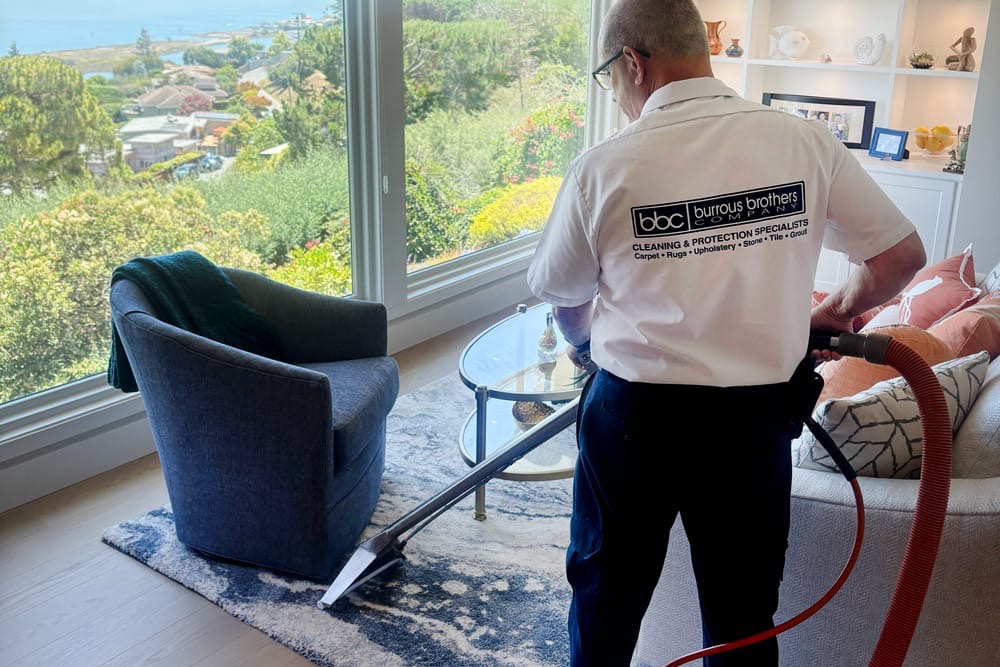
Marin has a lot of good rugs. Wool broadloom in the older Mill Valley houses, hand-knotted orientals in Tiburon and Belvedere, and a great many flatweaves and tufted wool rugs everywhere else. Most of them have never been professionally cleaned, because the usual advice is that a good rug has to be rolled up, sent to a plant, and returned two weeks later.
For most rugs, that is not true. Here is how we decide.
What “on location” means
We clean area rugs in your home with the same truck-mounted hot water extraction we use on wall-to-wall carpet. The rug stays on the floor, or on a clean surface we set up for it. We identify the fiber, test the dyes, pre-treat spots, apply a hot rinse, and extract it immediately, before the moisture reaches the foundation of the rug.
That last part is why it works. A rug’s weakness is its foundation, the cotton or wool warp and weft the pile is knotted onto. Soak it and you invite dye migration, shrinkage, and mildew. Truck-mounted extraction removes the moisture before it gets there, which is also why the rug is walkable the same day rather than hanging in a drying room for a week.
The rug is left pH balanced and essentially residue-free. Residue is what makes a freshly cleaned rug feel stiff and resoil quickly, and it is the most common complaint we hear about previous cleanings.
Why wool needs a different method
Wool is a protein fiber, closer to hair than to nylon. It holds far more water than a synthetic, it is sensitive to high pH, and it can felt or distort if agitated wet. Treat a wool rug like a nylon carpet and you get a rug that dries slowly, feels harsh, and sometimes browns at the tips as the moisture wicks up through the fiber.
So the settings change. Lower pH, controlled moisture, and gentler agitation. Wool also has one great virtue: it hides soil. A wool rug can hold an alarming amount of grit before it looks dirty, which is exactly why cleaning on a schedule matters more than cleaning when it looks bad. By the time a wool traffic lane looks grey, the grit has been cutting fibers for a long time.
The rugs we send out, and why
Some rugs are not a fit for on-location cleaning, and we would rather tell you than find out on your floor:
- Very thin rugs. Not enough pile to hold the cleaning solution away from the foundation.
- Rugs with fabric borders. Cotton and linen borders can shrink or bleed at a different rate from the rug itself.
- Plant fibers. Sisal, jute, and seagrass brown and distort with water. They need a dry or very-low-moisture method that a plant is set up for.
- Rugs that fail the dye test. Some vegetable-dyed and some cheaply dyed rugs release color the moment they are wet. If the test corner runs, we stop.
For those, we recommend an in-plant cleaner we trust. It is a smaller share of the rugs we see than most people expect.
Where this shows up around the county
The rug population changes town by town. In Mill Valley, it is wool runners on hardwood stairs and wool area rugs in canyon houses that hold damp, where fast extraction is the difference between a fresh rug and a musty one. In San Rafael, rugs on the radiant slabs of Terra Linda Eichlers have nowhere to release moisture downward, so drying is planned, not hoped for. In Novato, larger family homes tend to mean larger rugs and more of them, usually cleaned in the same visit as the carpet.
Protector, and whether your rug needs it
After cleaning, a fiber protector can be applied to the rug while it is clean. Liquids bead for long enough to be blotted, and dry soil releases more easily to the vacuum. On light-colored wool in a dining room or a living room with pets, it is usually worth doing. On a dark, densely knotted rug in a low-traffic bedroom, it often is not, and we will say so.
What to do next
Text us a photo of the rug and, if you can find it, a photo of the back. The back tells us the construction, and the construction tells us the method. Estimates are free, the estimate is the price, and the visit that cleans the rug can clean the carpet around it in the same morning.
More on the process is on our carpet and rug cleaning page, or ask for a free estimate directly.
Frequently asked
Do you pick up rugs and take them to a plant?
No. All of our rug cleaning is done on location, in your home, using the same truck-mounted hot water extraction we use on wall-to-wall carpet. Your rug never leaves the house and is dry the same day. For the small number of rugs that genuinely need in-plant washing, we will say so and recommend a cleaner we trust.
Will the colors run on my oriental rug?
We test dye stability in an inconspicuous corner before cleaning anything, and we match pH, temperature, and moisture to what the rug can take. A rug that fails the dye test is one we will not clean on location, and we will tell you why.
Which rugs should not be cleaned at home?
Very thin rugs, rugs with fabric borders that can shrink or bleed, and plant fibers like sisal, jute, and seagrass. Those belong with an in-plant cleaner, and we are happy to point you to one rather than clean something we should not.
How often should area rugs be cleaned?
Every twelve to eighteen months for rugs in living rooms, halls, and entries, the same schedule as carpet. Wool hides soil well, which is a virtue right up until the grit at the base of the pile has been cutting fibers for three years.
Ready for a cleaner home?
Call or text us for a free, no-pressure estimate. We’ll give you an honest assessment of what your space needs, and what it doesn’t, at an upfront price, with no surprises.