
Stone, Tile & Grout · October 21, 2026
Mold, Mineral Film, or Soap Scum? Reading Your Shower Grout
Dark, pink, or chalky shower grout is rarely one thing. How to tell mold from hard water film and soap scum, what works on each, and when to call.
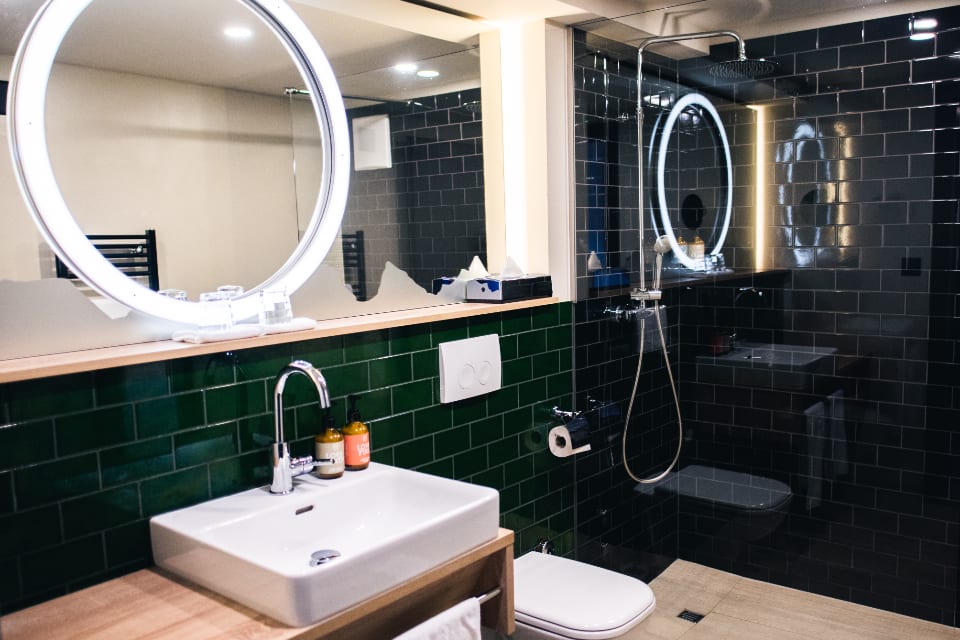
Dark grout in a shower looks like one problem and is usually three. Mold and mildew, mineral film, and soap scum and soil all turn grout dull, dark, or spotted, and they need different treatments. Treating the wrong one is how people end up scrubbing a shower every weekend with no lasting result.
Here is how to read what you are looking at.
The three things on your shower grout
Mold and mildew. A living growth. It tends to show as spotty or fuzzy patches, black, grey, green, or pink, and it concentrates where the surface stays wet: corners, the base of the walls, the shower pan edge, the lower grout lines.
Mineral film. Hard water leaves dissolved calcium and magnesium behind every time it evaporates. They build into a bonded, chalky layer that you can feel with a fingernail but cannot wipe off. We cover what it does in detail in our post on Marin’s hard water.
Soap scum and soil. Body oil, soap, and dirt that settle on the surface and sink into the grout pores. Soap scum bonds to mineral film far more readily than to clean tile, which is why the two show up together.
How to tell which one you have
You do not need a lab. A few observations sort it out:
- Where is it? Spots in the wettest corners and low lines point toward mold. An even dullness across all the grout and the tile edges points toward film and soil.
- What does it feel like? Rough and chalky is mineral film. Slimy or greasy is soap scum. Fuzzy or spotty and dark is more likely to be mold.
- What colors? Pink is usually a surface growth that wipes off and returns. Black, grey, or green in the pores is mold. White and cloudy is mineral.
- How fast does it return? If grout looks clean for a few months and then gets dark again, it was probably soil and film. If it returns in a few weeks in the same damp corners, think mold and moisture.
It is very common to have all three at once, layered.
Why the usual fixes backfire
The instinct is to reach for the strongest product and a stiff brush. Each causes damage:
Bleach lightens the surface but does not fix the porous grout, and it strips whatever sealer is left. The grout is then more open, and the problem returns faster.
Vinegar and acidic cleaners lift mineral film, but on natural stone they etch the surface, and on grout they break down sealer. Our hard-water post explains why this trades a cloudy film for a permanently duller surface.
Abrasive pads and powders scratch glaze and dull polished stone.
A neutral-pH cleaner made for the surface, a soft brush, and rinsing thoroughly is the safe version of a home clean. It will not fully clear grout that has soaked up years of film and soil, but it will not make things worse.
What actually works on grout
Grout is porous, so what is in the joint is in the joint, and surface cleaning does not reach it. What works is heat, dwell time, the right chemistry for the material, and extraction that pulls the dissolved soil out of the house. Truck-mounted hot water extraction flushes the joint and removes what comes out. It is the method behind most of the before-and-after results we see, and our post on whether your grout is beyond cleaning explains how to tell what is left to recover.
Sealing afterward matters just as much. A penetrating sealer slows how quickly water, soil, and minerals soak back in, and it makes the next clean easier. Our grout sealing guide covers what it does and how long it lasts, and sealing is why a cleaned shower stays clean longer.
What to do in the shower itself
- Squeegee the glass and tile after each shower. It removes the water before its minerals are left behind.
- Let it dry. Run the fan during and after, and leave the door open. Mold needs damp.
- Use a neutral-pH cleaner made for tile. Skip vinegar, bleach, and ammonia.
- Reseal on a schedule. For most Marin homes that is every two to three years, closer to eighteen months for a busy family bathroom.
When it is not a cleaning problem
Cleaning can remove surface growth and the soil it lives in. It cannot fix a moisture problem. If the dark patches are widespread, keep returning after thorough cleaning and drying, have spread to walls or the ceiling, or you can see or smell mold behind the tile, you are dealing with something else. A leak or poor ventilation needs a contractor, and heavy growth needs a mold professional. We will tell you if that is what we see.
When to call
Call when the grout is dark across the whole shower, the tile has gone cloudy, or you have cleaned it and it has come back. Text us a photo of the grout in good light and tell us how long it has been since it was cleaned or sealed. Our stone, tile and grout page covers the process, and the local pages are Sausalito and Mill Valley. Estimates are free on the contact page.
Frequently asked
How can I tell if shower grout is mold or just dirty?
Mold and mildew tend to show as spotty or fuzzy dark patches, often in corners and at the base where water sits. Soil and mineral film darken the whole line more evenly and feel rough or chalky. If it comes back quickly after cleaning in the same damp corners, suspect mold.
What is the white chalky film on my shower tile?
Usually hard water. Dissolved minerals stay behind when water evaporates, and they build into a bonded film that you can feel with a fingernail but cannot wipe off.
Does bleach kill mold in grout?
It can lighten the surface, but it does not fix the porous grout the mold lives in, and it strips sealer. We do not recommend bleach, ammonia, or vinegar on tile and stone.
When is shower mold not a cleaning job?
When it is widespread, keeps returning after thorough cleaning and drying, or has spread to walls, ceilings, or behind the tile. That points to a moisture problem that cleaning cannot solve, and it needs a contractor or mold professional.
Related reading
Stone, Tile & Grout
Faded Saltillo Tile: Cleaning and Resealing to Bring the Color Back
Faded, blotchy Saltillo has usually lost its sealer, not its color. Why it happens, how to clean Saltillo tile safely, and how resealing brings the tone back.
Read the postStone, Tile & Grout
What Salt Air Does to Floors in Sausalito
Salt grit, fog, and marine damp wear Sausalito floors faster than inland ones. What happens to stone, grout, carpet, and hardwood, and how to slow it down.
Read the postStone, Tile & Grout
Slate Floor Cleaning: Bringing Back a Dull Slate Entry in Mill Valley
Why slate entries and steps go dull in shaded Mill Valley canyons, what mopping cannot reach, and how cleaning and resealing bring the color back.
Read the postReady for a cleaner home?
Call or text us for a free, no-pressure estimate. We’ll give you an honest assessment of what your space needs, and what it doesn’t, at an upfront price, with no surprises.