
Stone, Tile & Grout · October 6, 2026
Grout Sealing: What It Does and How Long It Lasts in Marin
A grout sealer slows absorption. It does not waterproof a shower or fix cracked grout. How long it lasts in Marin, and how to tell when yours has worn off.
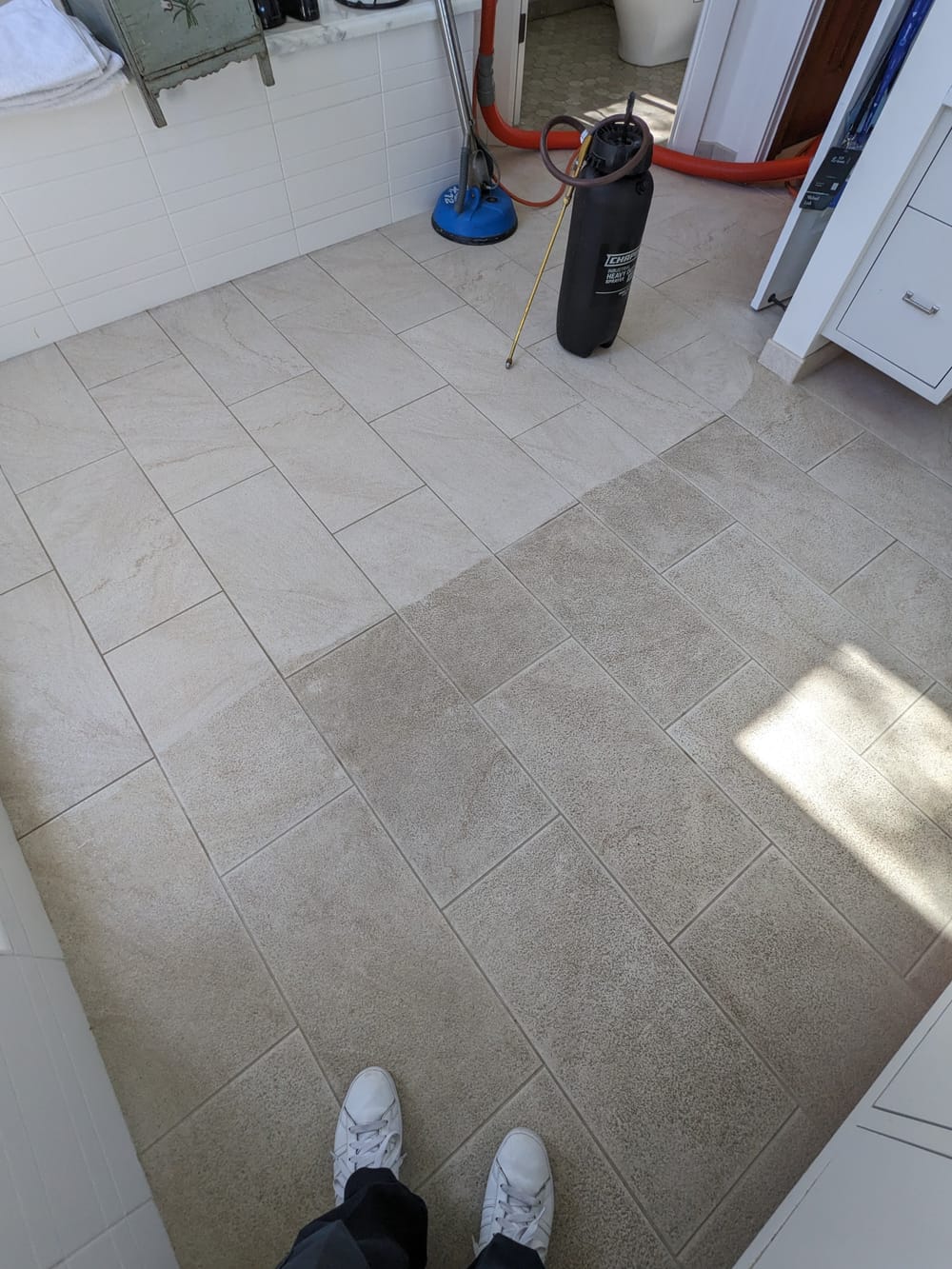
Grout sealing is one of those jobs that gets oversold and undersold at the same time. Some people expect it to make a shower waterproof. Others skip it as an add-on. Neither is right, and the gap between the two is where most disappointing tile jobs come from.
Here is what a grout sealer actually does, what it does not do, and how long it lasts in a Marin house.
What a grout sealer does
Ordinary grout is cement-based and full of tiny voids. It sits a few millimeters below the tile around it, so every mop, shower, and spill sends water into the joint, and whatever the water was carrying stays there when it dries. That is why grout darkens while the tile beside it still looks fine.
A penetrating sealer soaks into those voids and leaves a water- and oil-repellent barrier inside the grout, below the surface. It does not change how the grout looks. What it changes is speed. Water and spills that would soak into bare grout in seconds sit on top long enough to be wiped up, and everyday soil stays where a broom and a neutral-pH cleaner can reach it.
That is the whole benefit, and it is a real one. A sealed grout line stays close to the color it was on the day it was cleaned. An unsealed one starts filling back up the first time somebody mops.
What a grout sealer does not do
It is not a coating. A penetrating sealer works inside the grout. It does not form a film on top, and it does not add shine. Color sealing is a different product: a pigmented coating painted over the grout. When a color seal wears unevenly it looks blotchy, and that is its own problem, covered in our post on whether your grout is beyond cleaning.
It is not waterproofing. Sealer slows absorption. It does not make grout watertight, and it does not stop water that is already finding its way behind the tile. If a shower has a leak, sealer is not the fix.
It does not repair grout. Cracked, crumbling, or missing grout is tile-setter work. Sealing it changes nothing about the gap, and we will tell you so at the estimate instead of after you have paid for a cleaning.
It does not make grout stain-proof. A sealer buys you time. A spill left long enough will still get in.
Why you clean before you seal
Sealer goes into whatever is in the pores. If the pores are full of soil, the sealer goes in on top of it and holds it there. Seal a grey grout line and you get a grey grout line that is now harder to clean.
That is why sealing only makes sense right after a thorough cleaning. Truck-mounted hot water extraction flushes each joint with hot solution and pulls the soil out of the house, so the grout is open, clean, and, once it dries, ready to take a sealer properly. It is the only moment the grout will ever be in that state, which is why we recommend resealing every time we professionally clean a floor or a shower. Sealed surfaces are usually ready for normal use the same day.
On new tile, the same logic applies the other way around: sealers should go on shortly after installation, once the installer is satisfied the grout has cured, before it has had a chance to absorb anything.
How to tell whether your grout is still sealed
The water-drop test works on grout the same way it works on stone. Put a few drops of water on a grout line and wait five minutes.
- The water beads and the grout looks unchanged when you wipe it. The sealer is working.
- The grout darkens where the water sat. It is absorbing. The sealer has worn off, or was never there.
Test where the room gets used: the shower floor, the strip in front of the kitchen sink, the entry. A sealer wears unevenly, and a protected corner behind the toilet will pass long after the traffic lane has failed. Retesting every six months or so tells you when it is time, without guessing.
How long grout sealer lasts in Marin
Two to three years is the normal range for most homes. Busy family bathrooms, kitchens, and entries can need resealing closer to every eighteen months. Where in Marin you live moves the number too.
Coastal homes. Salt-laden grit and marine damp are hard on sealers. In Sausalito, bathroom grout often stays damp between showers, and entry grout takes salt and grit off the street. We usually recommend the shorter end of the window there: closer to every two years than every three.
Shaded canyon houses. In Mill Valley, redwood shade keeps houses damp well into spring, and kitchen and mudroom grout takes trail grit and pet traffic. Toward the shorter end again.
Bay-front homes. In Tiburon and Belvedere, waterfront humidity keeps bathroom and kitchen grout damp, and soil settles into the joints. Same advice.
Central and north Marin. Inland San Rafael and Novato have a different problem: hard water. Mineral film builds on shower tile and works into grout pores along with soil. Sealing slows how quickly it comes back, and a squeegee after showers does more than any product to keep minerals from being left behind in the first place.
Household cleaners. Anywhere in the county, strong high-pH cleaners, bleach, ammonia, vinegar, and general-purpose sprays strip sealers. If the grout has been cleaned with whatever was under the sink, assume the sealer is gone, whenever it went on. A neutral-pH cleaner made for tile keeps it working longer.
When sealing is not enough
Sealing is the second half of a cleaning job. On its own, it is not the answer to every grout problem, and these are the cases where it will not get you where you want to be:
- The grout is cracked, crumbling, or missing. Repair first. Sealing comes after.
- Water is getting behind the tile. Soft grout in a shower, loose tiles, or staining on the other side of the wall point to a repair, not a sealer.
- The grout was color-sealed and the coating has worn unevenly. The coating has to be dealt with on its own terms.
- The discoloration is in the material. Rust bleeding through or a dye stain will not change with sealing, and only partly with cleaning.
- The grout is epoxy. It is essentially non-porous, rarely discolors, and does not need sealing. If epoxy grout looks dirty, cleaning is the whole job.
What to do next
Run the water-drop test on your busiest grout line and text us a photo of what happens, along with a shot of the floor or shower. That is the fastest way to get a straight answer on whether you need cleaning and sealing or something a sealer cannot fix.
More on how we clean and seal, and the surfaces we handle, is on our stone, tile and grout page. Or ask for a free estimate.
Frequently asked
Should I seal my grout?
If it is ordinary cement-based grout, yes. It is porous, and without a sealer it absorbs mopping water, soil, and minerals and darkens over time. Epoxy grout is the exception: it is essentially non-porous and does not need it.
How long does grout sealer last?
Typically two to three years in a Marin home. Busy family bathrooms, kitchens, and entries can need resealing closer to every eighteen months, and coastal and shaded homes sit toward the shorter end of the range. Harsh household cleaners shorten it further.
How can I tell if my grout needs resealing?
Put a few drops of water on a grout line in a well-used spot and wait five minutes. If the water beads, the sealer is working. If the grout darkens where the water sat, it is absorbing and it is time to clean and reseal.
Does sealing grout make a shower waterproof?
No. A penetrating grout sealer slows how fast water and soil soak into the grout. It is not waterproofing, and it will not stop a leak through cracked or missing grout. If water is getting behind the tile, that is a repair for a tile setter.
Can I seal grout myself?
You can apply a penetrating sealer yourself. The hard part is the step before it: the grout has to be genuinely clean and dry first, because sealer applied over soil locks that soil in. If a mop has been working on the floor for years, the grout is usually not as clean as it looks.
Related reading
Stone, Tile & Grout
Sealed vs. Unsealed Stone: What Every Marin Homeowner Should Know
What a stone sealer actually does, what it cannot do, how to test whether yours is still working, and how long it should last in a Marin home.
Read the postStone, Tile & Grout
Natural Stone Care in Marin: Marble, Travertine, Limestone, Slate and Granite
Marble, travertine, limestone, slate, and granite each behave differently under spills, cleaners, and foot traffic. What each one needs, what damages it, and how to tell etching from staining.
Read the postStone, Tile & Grout
Is Your Grout Beyond Cleaning? How to Tell If It Can Be Restored
Dark grout is usually holding soil, not stained for good. How to tell what will clean up, what needs sealing, and what genuinely needs replacing.
Read the postReady for a cleaner home?
Call or text us for a free, no-pressure estimate. We’ll give you an honest assessment of what your space needs, and what it doesn’t, at an upfront price, with no surprises.