
Stone, Tile & Grout · August 24, 2026
Why Marin’s Hard Water Wrecks Tile and Grout, and What to Do About It
Hard water dulls tile, clouds glass, and holds soil in grout. What is actually happening in Marin showers and kitchens, and how to get ahead of it.
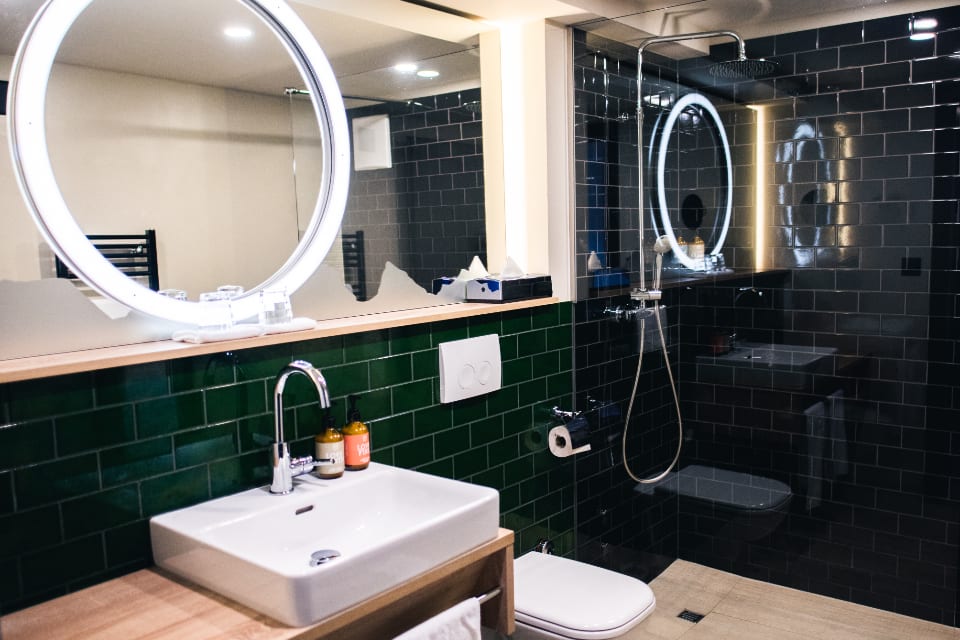
If you live in Marin and your shower tile has gone dull, cloudy, or chalky white at the edges, the culprit is probably not soap and it is probably not neglect. It is the water.
What hard water actually leaves behind
Hard water carries dissolved minerals, mostly calcium and magnesium. Every time water evaporates off a surface, those minerals stay. What starts as invisible spotting builds into a bonded mineral film — the cloudy layer you can feel with a fingernail but cannot wipe off.
That film is a problem for three reasons:
- It dulls the surface. Light scatters off it instead of reflecting, so polished tile and glass go flat.
- It grips soap and body oil. Soap scum bonds to mineral film far more readily than it bonds to clean tile, which is why the same shower gets dirtier faster every year.
- It fills grout pores. Grout is porous, so mineral deposits build inside the joints as well as on them, taking soil down with them.
That third one is what turns a cosmetic issue into a maintenance issue. Once mineral and soil are in the joint, surface cleaning does not reach them. It is also why grout that looks permanently dark usually is not.
Why scrubbing makes it worse
The instinctive response is a stiffer brush and a stronger product. Both cause damage.
Abrasive pads and powders scratch the glaze on ceramic and porcelain and permanently dull polished stone. Acidic descalers will lift mineral film, but on marble, limestone, and travertine they also etch the stone itself — you trade a cloudy film for a permanently duller surface. And strong, high-pH cleaners strip whatever sealer you have left, which accelerates everything.
What actually works is heat, dwell time, the right chemistry for the specific material, and mechanical extraction that removes the dissolved deposit instead of pushing it around. That is a hot water extraction job, and it is why the results usually look out of proportion to the effort visible from the doorway.
Where in Marin this hits hardest
The pattern is not uniform across the county. Inland central and north Marin homes tend to see more of it than the immediate coast, and they see more of it in summer when everything runs hotter and drier.
In San Rafael, the classic version is a shower pan and surround in a Terra Linda or Peacock Gap house with a chalky band at the tile edges and grout that has gone grey. In Novato, the same problem tends to arrive at scale — newer homes with continuous porcelain through kitchens, halls, and baths mean a lot more linear feet of grout doing the absorbing.
Coastal towns get a different version of the same story. Salt, not calcium, is the main mineral load in Sausalito, and marine damp keeps the surfaces wet longer, which is its own problem.
The maintenance that actually pays off
Three habits do most of the work:
Dry the glass and the tile edges. A squeegee after showers removes the water before its minerals get left behind. This single habit does more than any product.
Use a neutral-pH cleaner made for the surface. Skip vinegar on natural stone entirely, along with bleach, ammonia, and general-purpose sprays. They strip sealers and, on calcite-based stone, etch the surface.
Get it professionally cleaned and sealed on a schedule. For most Marin homes that is every two to three years, and closer to eighteen months for a busy family bathroom. Sealing is what keeps the next round of minerals sitting on the surface rather than soaking in.
When to call
If the film is recent, a squeegee and a neutral cleaner may hold the line. If it has been building for years — dull tile, grey grout, glass that never quite looks clean — it is past what maintenance will fix, and cleaning and resealing is the reset.
Text us a photo, or ask for a free estimate. We will tell you what is realistic for your specific surface first, including the times when the honest answer is that the film has been there long enough to have done permanent damage. Details on the method and the materials we handle are on our stone, tile and grout page.
Frequently asked
Can hard water film be removed from shower tile?
Usually, yes. Mineral film responds far better to the right product combined with hot water extraction than it does to scrubbing. Sealing afterward slows how quickly it returns.
How should I clean tile floors without damaging them?
Vacuum or dust-mop first so grit is not dragged across the glaze. Then damp-mop with a neutral-pH cleaner made for the surface, changing the rinse water often so you are not spreading dirty water into the grout. Avoid vinegar, bleach, ammonia, and abrasive pads, all of which either etch stone, strip sealer, or scratch the glaze.
Will a water softener stop it coming back?
It helps considerably, because it reduces the mineral load being deposited every time the shower runs. It does not remove the film that is already there, which still needs cleaning first.
Related reading
Stone, Tile & Grout
Faded Saltillo Tile: Cleaning and Resealing to Bring the Color Back
Faded, blotchy Saltillo has usually lost its sealer, not its color. Why it happens, how to clean Saltillo tile safely, and how resealing brings the tone back.
Read the postStone, Tile & Grout
What Salt Air Does to Floors in Sausalito
Salt grit, fog, and marine damp wear Sausalito floors faster than inland ones. What happens to stone, grout, carpet, and hardwood, and how to slow it down.
Read the postStone, Tile & Grout
Slate Floor Cleaning: Bringing Back a Dull Slate Entry in Mill Valley
Why slate entries and steps go dull in shaded Mill Valley canyons, what mopping cannot reach, and how cleaning and resealing bring the color back.
Read the postReady for a cleaner home?
Call or text us for a free, no-pressure estimate. We’ll give you an honest assessment of what your space needs, and what it doesn’t, at an upfront price, with no surprises.