
Upholstery · October 21, 2026
Upholstery Cleaning Codes Explained: W, WS, S, and X
The cleaning code on your sofa tag decides how a piece can be cleaned. What W, WS, S, and X mean, where to find the tag, and why it is only a starting point.
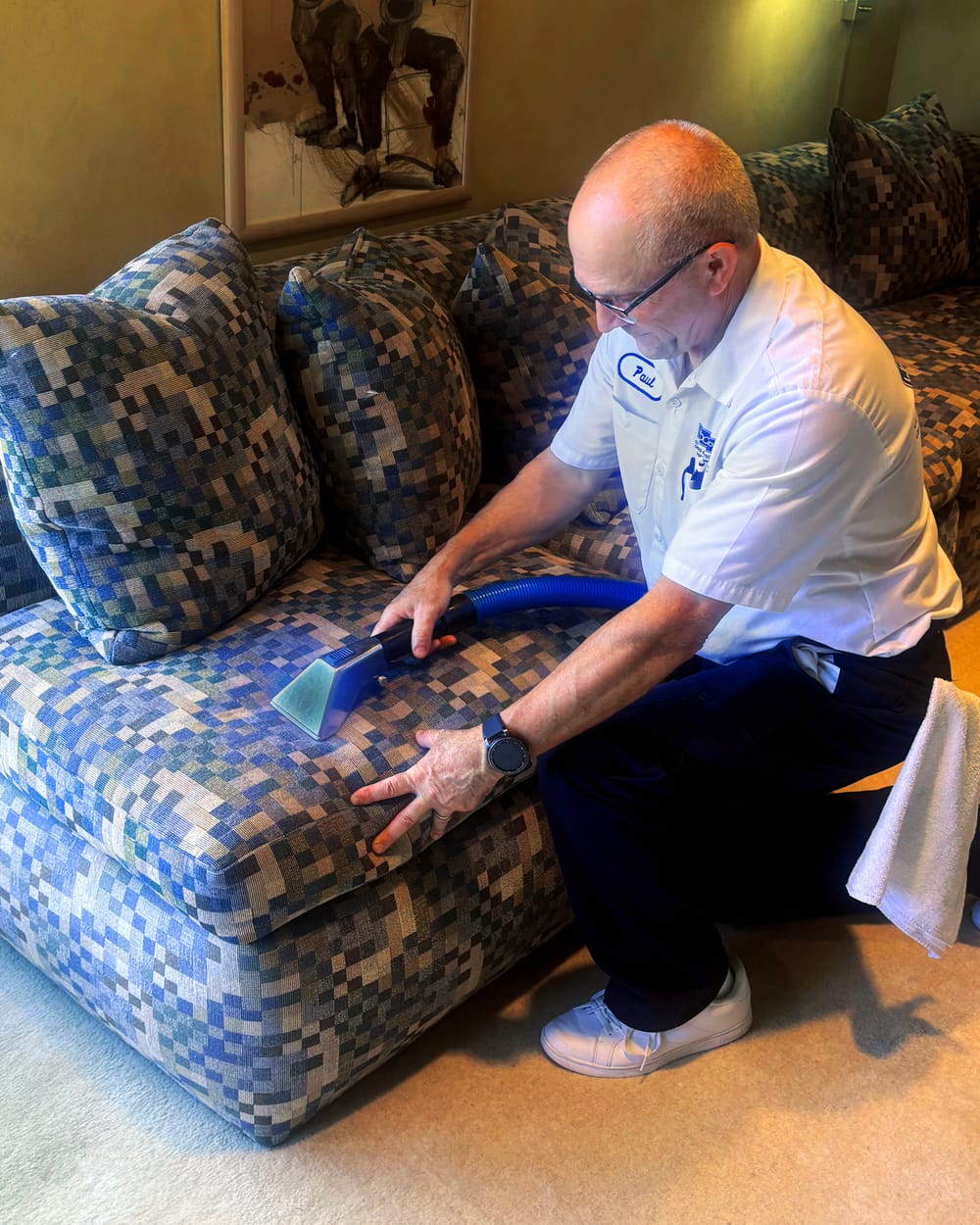
There is a tag on your sofa that most people have never read. Sewn to the underside of a cushion or tucked under the frame, it carries a single letter or pair of letters, and those letters are the manufacturer’s instructions for how the fabric should be cleaned.
Here is what they mean, and why they are a starting point rather than a verdict.
The four codes
W: water-based cleaner. The fabric can be cleaned with a water-based cleaning solution. This is the most common code on modern upholstery, and the most forgiving.
S: solvent only. No water. Water can leave rings, make the fabric shrink or stiffen, or move the dye, and the damage cannot be undone. A piece with this code needs a solvent-based cleaner.
WS: water-based or solvent. Either method is acceptable. It gives the most room to choose.
X: vacuum or light brushing only. No water and no solvent. The fabric is too delicate for either, and the manufacturer expects the owner to vacuum it and live with what is left.
These are the manufacturer’s recommendations for the fabric on the piece, not a guarantee of what it can survive.
Where to find it
On most sofas the tag is sewn to the underside of a seat cushion, or tacked to the frame beneath the piece. On chairs it is usually under the seat. It sometimes sits on the back panel. If the tag has been cut off or worn away, that is common and not a problem, and we cover it below.
Take a clear photo of the tag, front and back if there is print on both sides, before you call. It saves a visit’s worth of questions.
Why the code is where we start, not where we finish
The tag describes the fabric as it left the factory, and the piece in your living room is not that. It has been sat on for years, it may have been cleaned before with something unknown, and the fabric on the cushions may not be the same as the fabric on the frame. So the code is the first thing we look at.
After that, we identify the fiber and test dye stability in a hidden spot before anything gets wet. Method, temperature, and drying are matched to the piece. Occasionally a piece turns out to be a real risk, and you hear that at the estimate, not after.
What each code means for a Marin house
Marin interiors run to linen, cotton slipcovers, silk, and pieces that have been in the family a long while, alongside plenty of everyday synthetics and performance fabrics. A few patterns:
- A W or WS sofa in a family room is the straightforward case, and cleaned on a schedule it holds up well. See our pet odor guide for what cleaning can and cannot do when the problem is the cushion rather than the cover.
- An S code is common on delicate and decorative fabrics. We tell you at the estimate what it means for your piece.
- An X piece is a vacuum-and-gentle-brushing fabric. If it needs more than that, we will say so honestly.
Why not to experiment at home
The common mistakes are all about water and speed. A wet cloth on an S-coded fabric leaves a ring that is permanent. A household spot remover on a dye that is not stable moves color across the cushion. Scrubbing a stain with the wrong product spreads it and can set it. If the tag says S or X, or you do not know the code, leave the wet cleaning alone until someone has tested a hidden area.
When the tag is missing
It is common for a tag to be cut off during reupholstery or just worn away. That is not a barrier. Without a code, the fiber test and the dye-stability test do the work, and they are more informative about a particular piece than a letter on a tag. If your sofa has been reupholstered, the tag you find may even belong to the frame and not the fabric.
After the clean
Fabric protector afterward keeps the next round of soil on the surface where it can be blotted. Our post on carpet protector explains what protector does and does not do, and the same logic holds for upholstery.
Next step
Text us a photo of the tag and of the piece, and tell us what has happened to it. We will say what we would do and what we would not. Our upholstery cleaning page covers the process, and our work in town is on the Mill Valley upholstery page. Estimates are free on the contact page.
Frequently asked
What do W, WS, S, and X mean on a sofa tag?
W means the fabric can be cleaned with a water-based cleaner. S means solvent only, no water. WS means either a water-based cleaner or a solvent. X means vacuum or light brushing only, with no water and no solvent. They are manufacturer recommendations for the fabric on the piece.
Where is the cleaning code on my couch?
Usually on a tag sewn to the underside of a seat cushion or on the frame under the piece, and sometimes on the back. Photograph it before you call.
Can I clean an S-coded sofa with water?
You should not do it yourself. Water on some S-coded fabrics causes rings, shrinkage, or dye movement that cannot be undone. We tell you at the estimate what an S code means for your piece rather than guess.
My sofa has no tag. Can it still be cleaned?
Often, yes. We identify the fiber and test dye stability on a hidden area before anything gets wet, and that test tells us more about the piece in front of us than a code does.
Related reading
Upholstery
Getting Wood-Smoke Odor Out of Carpet and Upholstery
Fireplace and wood-stove smoke settles into carpet, sofas, and cushion foam. What cleaning removes, what it only reduces, and why you need to repeat it yearly.
Read the postUpholstery
Pet Odor and Stains in Upholstery and Carpet: What Cleaning Can and Cannot Fix
A dog on the sofa and a cat with opinions leave two different problems: what is in the fabric and what has reached the cushion or the pad. How we tell them apart, what cleaning fixes, and when to say so honestly.
Read the postReady for a cleaner home?
Call or text us for a free, no-pressure estimate. We’ll give you an honest assessment of what your space needs, and what it doesn’t, at an upfront price, with no surprises.