
Upholstery · October 21, 2026
Getting Wood-Smoke Odor Out of Carpet and Upholstery
Fireplace and wood-stove smoke settles into carpet, sofas, and cushion foam. What cleaning removes, what it only reduces, and why you need to repeat it yearly.
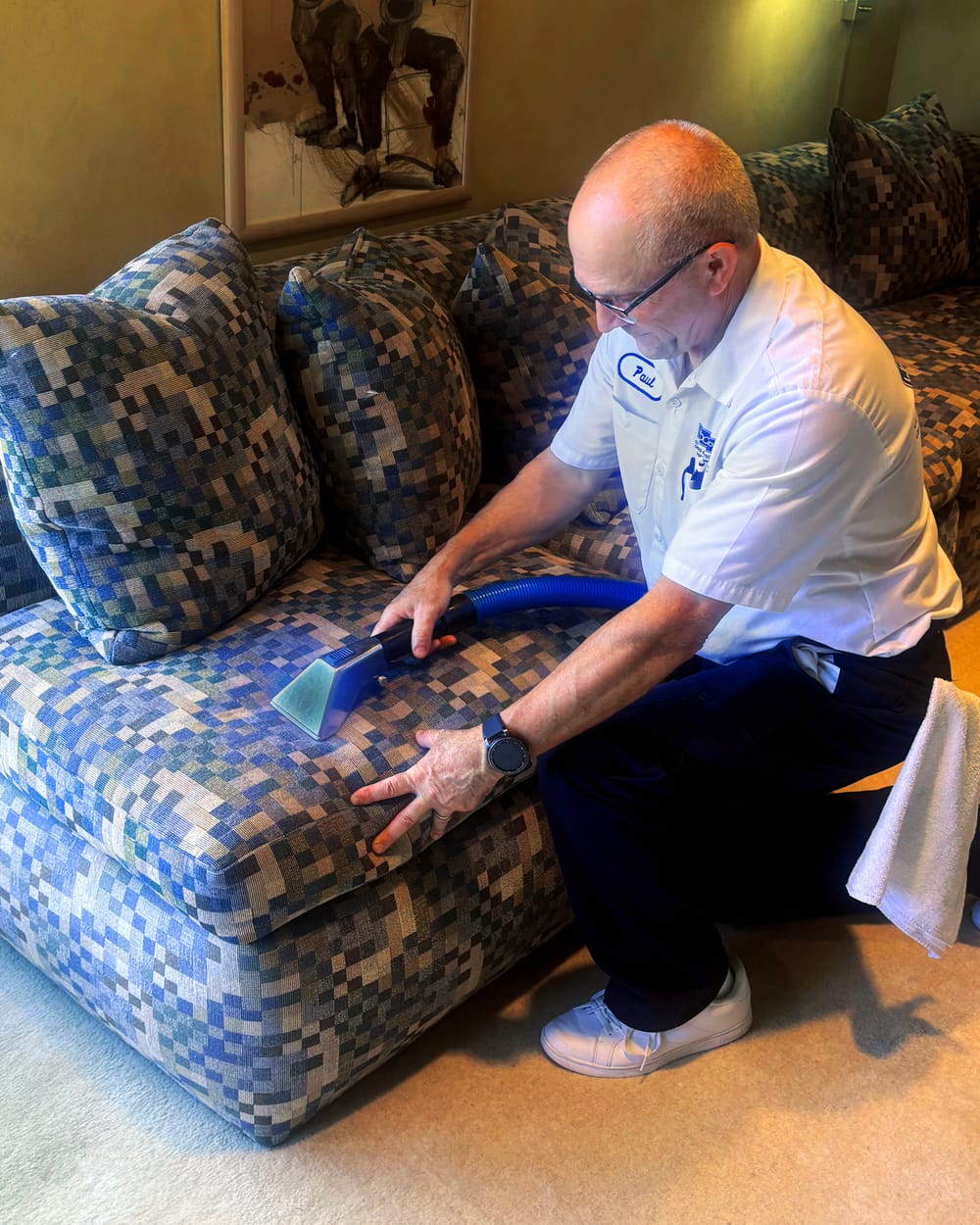
A wood fire is one of the best things about a Marin winter, and one of the harder things on a living room. Many canyon houses still burn wood through the cold months. A fireplace or a stove throws off a fine smoke that settles on everything soft in the room: the carpet, the sofa, the curtains, and the cushions that have the most surface and the most hollow space to hold it.
The smell builds slowly, so you stop noticing it. Then a guest says something, or you come home from a week away and your own living room smells like a campfire.
What the smell actually is
Wood smoke is not just an odor. It is a very fine film of tarry particles that lands on every surface and sticks. The smell is the film. That matters, because it explains both why cleaning works and where it does not.
On carpet and on the face of upholstery, the film sits in the fibers, in reach of hot water extraction. A thorough extraction and rinse pulls the particles out, and with them the residue that was holding the odor. That is the part that cleans up well.
Why damp makes it worse
A smoky room in a dry house smells faintly of smoke. A smoky room in a shaded canyon house, where the air holds moisture well into spring, smells much stronger on a damp day. Moisture wakes the odor up, so a carpet or sofa that seemed fine in September smells strongly in November.
It is also why a piece that has been cleaned with an unrinsed product can smell worse afterward: damp residue is a hospitable place for odor. Our process rinses, so the fabric dries clean and pH balanced.
What cleaning can and cannot do
What comes out. Smoke film on carpet fibers and on upholstery fabric. This is most of what you smell, and it comes out in a proper extraction.
What only improves. Smoke that has gone through the cover into the cushion foam or batting. Foam is a sponge, and what is deep in it can only be reached so far. The improvement is real, but it is partial, and we will tell you at the estimate which of your pieces is more likely to be in this category. Our pet odor post explains the same surface-versus-deep distinction for pets.
What cleaning cannot stop. A fire that is still burning. If the fireplace or stove is in use through the winter, new smoke is arriving every week, and you should expect to repeat the clean annually rather than once and for all. We would rather tell you that than sell you the same job twice in a season.
The rest of the room
Carpet and upholstery are where a smoky room shows it most, but they are not the only soft things in it. Curtains, throw pillows, and rugs hold smoke too. It helps to think of the room as a set:
- Carpet and area rugs. Cleaned on location. Wool rugs are matched to the fiber.
- Sofas and chairs. Cleaned in your house, with the fabric identified and dye tested first.
- Cushions. Cleaned along with the sofa, and the likeliest place for the odor to be deepest.
If the room is a single space with a fireplace in the corner, one visit for the carpet and the upholstery together makes sense, and you get one estimate for both.
Keeping it down between cleanings
- Burn dry, seasoned wood. Wet wood smolders and produces much more smoke.
- Keep the flue and chimney cleaned, so the smoke goes up and not into the room.
- Vacuum with a good filter, so fine particles are lifted rather than blown back into the air.
- Air the room out on dry days. In a damp house, that matters more than it sounds.
- Protector on the carpet and the sofa keeps the next round of soil on the surface, where it is easier to remove.
What this is not
This post is about the ordinary smoke of a fireplace or a wood stove in daily use. It is not about fire damage. Smoke and soot from a house fire are a restoration job, with different chemistry and different safety questions, and we will tell you if that is what you are dealing with.
Next step
If the living room smells like last winter, text us a photo of the room and tell us what is in it and how long the fireplace has been in use. We will tell you what we would clean and what is likely to come out fully. Our upholstery cleaning page and Mill Valley upholstery page describe the process, our carpet and rug cleaning page covers the floors, and our drying guide covers what to expect afterward. Estimates are free on the contact page.
Frequently asked
Will cleaning get wood-smoke smell out of a sofa?
In most cases it reduces it dramatically, and often removes it. Smoke odor sits in the fabric and in the residue on it, and both come out in a proper extraction and rinse. Where smoke has penetrated the cushion foam itself the improvement is real but partial.
Why does my carpet smell like smoke when the fireplace is off?
Because smoke particles settle into carpet fibers, and damp air, as in a shaded Marin house, wakes the odor up again. Cleaning removes the particles and the residue holding them.
How often should I clean if I burn wood all winter?
Expect to repeat it annually rather than once and for all. Cleaning clears what has built up, but it cannot stop new smoke arriving.
Do you clean smoke damage from a house fire?
No. This is about the ordinary odor of a fireplace or wood stove in daily use. Fire and smoke damage from a house fire is a restoration job, and we will tell you if that is what you are dealing with.
Related reading
Upholstery
Upholstery Cleaning Codes Explained: W, WS, S, and X
The cleaning code on your sofa tag decides how a piece can be cleaned. What W, WS, S, and X mean, where to find the tag, and why it is only a starting point.
Read the postUpholstery
Pet Odor and Stains in Upholstery and Carpet: What Cleaning Can and Cannot Fix
A dog on the sofa and a cat with opinions leave two different problems: what is in the fabric and what has reached the cushion or the pad. How we tell them apart, what cleaning fixes, and when to say so honestly.
Read the postReady for a cleaner home?
Call or text us for a free, no-pressure estimate. We’ll give you an honest assessment of what your space needs, and what it doesn’t, at an upfront price, with no surprises.