
Hardwood · October 8, 2026
How Often Should Hardwood Floors Be Professionally Cleaned?
Most finished hardwood needs professional cleaning every one to two years, sooner with pets, kids, or trails. A schedule by household and what to do between.
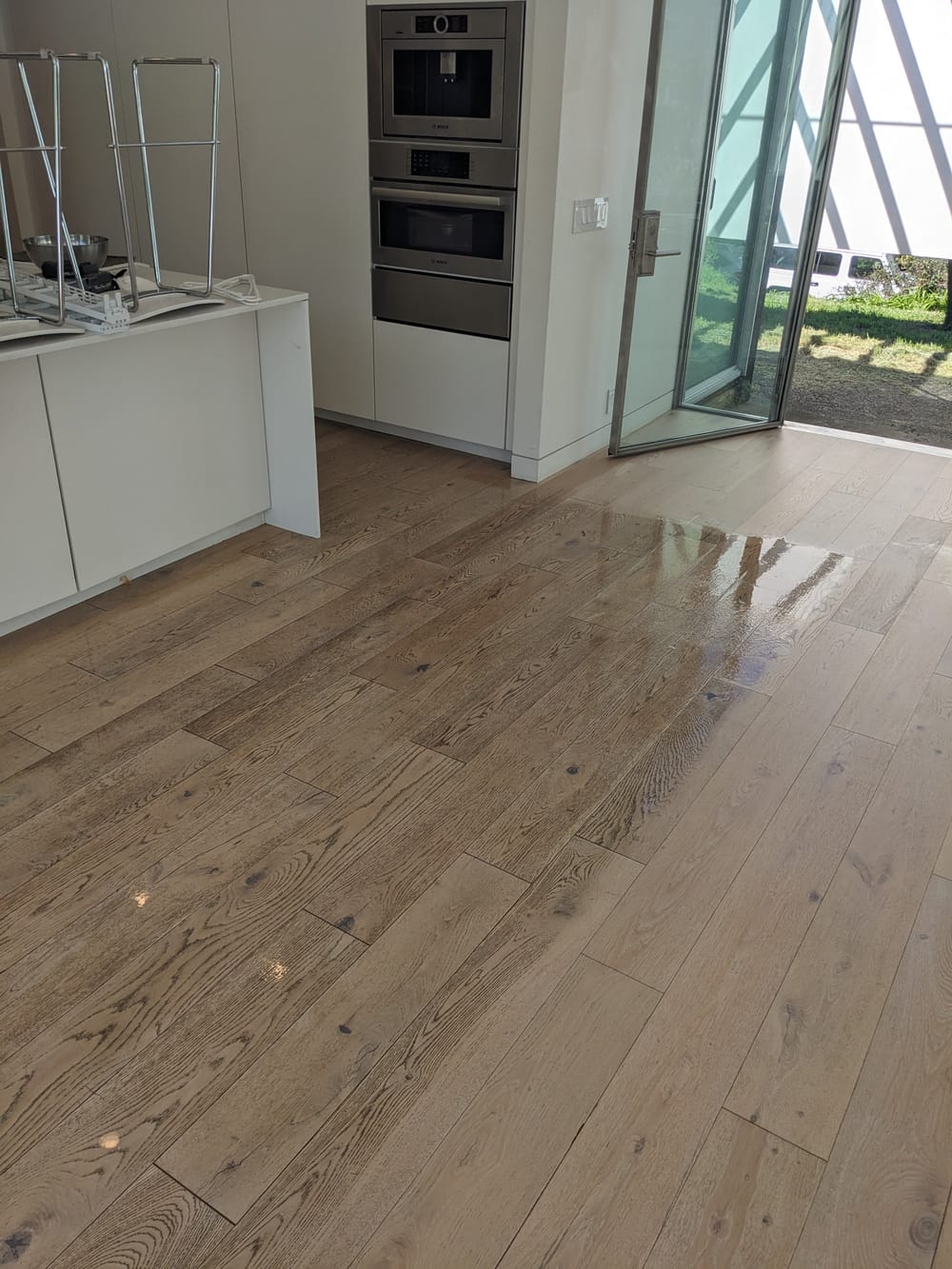
Hardwood looks after itself better than carpet, and that is the trouble. It does not go grey in a year the way a carpet lane does, so it tends to get cleaned when it finally looks bad, by which point the finish has been taking abrasion for a long time.
As a general guideline, most finished hardwood floors benefit from a professional cleaning every one to two years. Where in that range your floor belongs depends on who lives in the house and what they walk in on.
This post is about finished hardwood, the kind with a clear coating on top, which is what our process is built for. If you are trying to decide whether your floor needs cleaning or a full refinish, start with hardwood floor cleaning vs. refinishing.
What a professional cleaning does that mopping cannot
A mop handles what is sitting on the surface. Over time, two other things build up that it cannot reach. Fine grit works into the seams between boards and into scratches in the finish. And cleaning products, even good ones used carefully, leave a little residue each time, which holds soil and turns into a dull film.
Our intensive cleaning system lifts that embedded soil and residue out of the finish and off the floor. Then, where the floor benefits from it, an optional hardwood finish protector restores a uniform sheen across the room, matched to the rest of the house. There is no sanding, no dust, and low odor, and most floors can be walked on the same day.
The schedule matters because the finish is the part that wears. A finish that is cleaned and refreshed regularly keeps protecting the wood. A finish that is left to wear through stops protecting it, and then the only fix is sanding.
The schedule, by household
A quiet house. Adults, no pets, shoes off at the door. Every two years is usually enough, and a floor in a room that barely gets used can go longer. We would rather tell you that than book you sooner than you need.
A typical family house. Every one to two years, with the kitchen, entry, and hall at the shorter end. You do not have to do every room on the same cycle.
Pets. Closer to once a year for the rooms the animals use. Dog nails scratch the finish, and a dog coming in from outside brings grit and water into the same stretch of floor every day. Keeping nails trimmed helps more than most people expect.
Young children. About once a year for the kitchen and the rooms they play in. Spills, dropped food, toys dragged across the floor, and a lot of trips in and out of the yard.
Trail households. In Mill Valley, the soil that comes in on boots and paws from the trails is sharp, and in the traffic lanes it works on a finish like fine sandpaper. In a busy house with dogs, plan on the traffic lanes about once a year.
Coastal and damp houses. In Sausalito, salt-laden dust and sand come in off the bay and the street, and both are abrasive. Damp air also makes wood swell and shrink through the year, which opens fine gaps between boards that collect soil. Floors there are worth keeping on the shorter end of the range.
Larger inland homes. In Novato, hot, dry summers with doors open bring in fine dust, and family homes tend to carry long runs of hardwood through kitchens and halls. The lanes from the garage and the back door go first. Once a year for those lanes and every two years for the rest is a sensible default.
The routine between visits
A professional cleaning every year or two only works if the floor is looked after in between. Most of that routine is about keeping grit off the floor and keeping water and residue out of the finish.
Daily or every few days:
- Dust-mop with a dry microfiber pad, or vacuum with a hard-floor head and the beater bar off. The goal is to pick up grit before someone walks on it.
- Wipe up spills as they happen with a dry or barely damp cloth.
Weekly, or as needed:
- Damp-mop only when the floor needs it, with a well-wrung mop and a cleaner made for finished hardwood.
- Shake out or wash the entry mats.
Always:
- Mats inside and outside every door that leads to a trail, a deck, a garage, or a yard.
- Felt pads on chair and table legs, replaced when they wear thin or pick up grit.
- No steam mops. Heat and moisture driven into the seams and the finish can cloud the finish and make boards swell.
- No wet-mopping. Standing water finds the seams between boards.
- No vinegar. It is acidic, and used regularly it dulls a finish.
- No oil soaps or products that promise to add shine. They leave a film that looks good for a day, then holds soil and builds into a haze.
Signs your floor is due
You do not have to go by the calendar alone. These are the signs a floor is ready for a professional cleaning:
- Dull traffic lanes. The path from the door to the kitchen has lost its sheen while the edges of the room still have it.
- Grime in the board seams. Dark lines between boards that mopping does not touch.
- Uneven sheen. Some areas look glossy and others flat, particularly where rugs or furniture have moved.
- The floor looks hazy right after mopping. That is usually residue buildup, not dirt.
- It feels slightly tacky underfoot, another sign of product buildup.
Any of these on a floor where the finish is still intact is a cleaning job, not a refinishing job.
When cleaning is no longer enough
There is a point where the honest answer is a refinish. If you can see bare wood where the finish has worn through, if there are deep gouges into the wood, if boards are cupped, stained, or blackened by water, or if the finish is peeling or flaking, cleaning and a fresh sheen will not fix it. Those floors need traditional sanding and refinishing, and we will say so at the estimate rather than clean a floor that cannot be helped. The full breakdown is in hardwood floor cleaning vs. refinishing.
The reason to clean on a schedule is to stay well away from that point. A hardwood floor can only be sanded so many times before the boards are too thin, and every cleaning that keeps the finish intact pushes the next sanding further out.
Setting your own schedule
The ranges above are a starting point, and your house may be the exception in either direction. Text us a photo of the floor in daylight, ideally from a low angle so the sheen and the traffic lanes show, and tell us who lives in the house, two legs and four. We will tell you whether it is due, and whether it needs cleaning or something more.
The process is on our hardwood floor cleaning page, and estimates are free on the contact page.
Frequently asked
How often should hardwood floors be professionally cleaned?
As a general guideline, every one to two years for most homes. Pets, young children, and a household that comes in off the trails push it toward once a year, at least for the traffic lanes. A quiet house where shoes come off at the door can sit at the longer end.
How often should you mop hardwood floors?
Less often than most people think. Dust-mop or vacuum with a hard-floor head several times a week to pick up grit, and damp-mop only when the floor needs it, with a well-wrung mop and a cleaner made for finished hardwood. Never wet-mop, and do not use vinegar or a steam mop.
Why do my hardwood floors look dull right after I mop them?
Usually residue. Many floor cleaners, and oil soaps in particular, leave a thin film behind, and over time it builds into a haze that holds soil and dulls the sheen. A professional cleaning lifts that buildup out of the finish, and switching to a residue-free hardwood cleaner keeps it from coming back.
Can professional cleaning replace refinishing?
For floors that are dull, grimy, or lightly scratched, often yes. Cleaning plus a finish protector restores a uniform sheen without sanding. It cannot fix bare wood, deep gouges, water damage, or a peeling finish, and those floors need traditional refinishing.
Is steam cleaning safe for hardwood floors?
We do not recommend it. Steam pushes heat and moisture into the seams between boards and into the finish, and over time that can cloud the finish and make boards swell. Dry dust-mopping and the occasional well-wrung damp mop are safer.
Ready for a cleaner home?
Call or text us for a free, no-pressure estimate. We’ll give you an honest assessment of what your space needs, and what it doesn’t, at an upfront price, with no surprises.