
Hardwood · September 25, 2026
Hardwood Floor Cleaning vs. Refinishing: What Mill Valley Homes Actually Need
Most dull, scratched, or grubby hardwood in Mill Valley does not need sanding. How to tell a floor that needs cleaning and a fresh sheen from one that needs a full refinish, and what each involves.
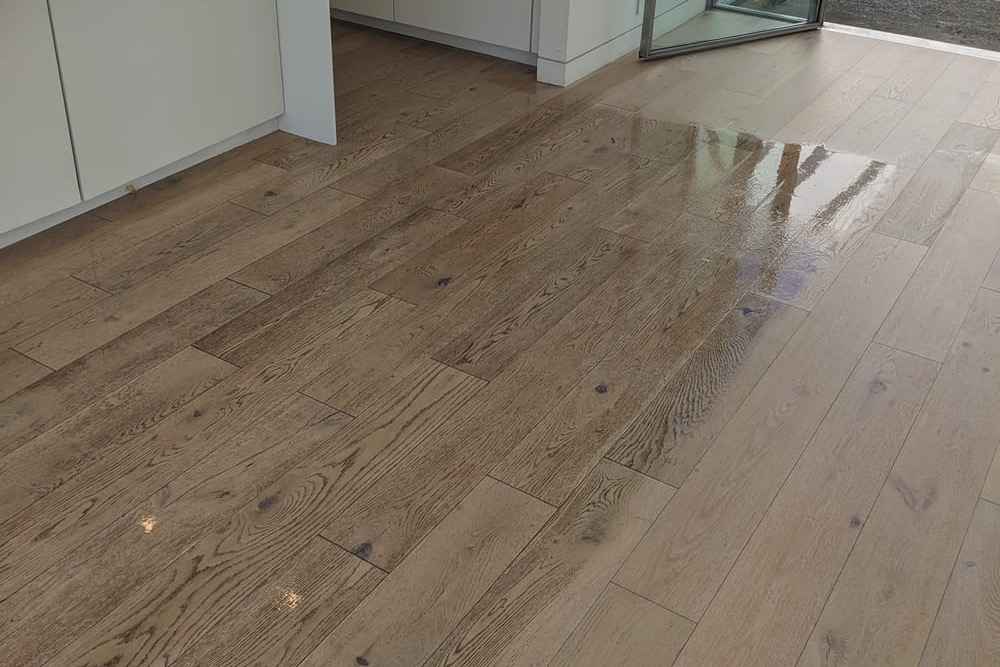
Mill Valley is a hardwood town. Old Mill and Blithedale Canyon houses have original fir and oak, the mid-century houses in Alto and Scott Valley have oak strip, and almost everything built or remodeled since has finished hardwood through the main rooms. It is also a trail town with a large dog population, and that combination is what wears a wood floor out.
When the floor starts to look tired, the assumption is that it needs refinishing. Usually it does not. Here is how to tell.
What a tired floor usually is
A finished hardwood floor is wood with a clear coating on top. Nearly everything you see when a floor looks bad is happening to that coating, not to the wood:
- Dull traffic lanes between the front door, the kitchen, and the stairs. Grit carried in from the trail has been abrading the finish every time someone walks across it.
- A grey or grubby film that mopping does not lift. This is soil and cleaning-product residue bonded into the finish. Most floor cleaners leave a little behind every time, and over a few years it builds into a haze.
- Fine scratches from dog nails and chair legs, visible in raking light.
- Uneven sheen where a rug sat for years, or where one room was recoated and the next was not.
None of those reach the wood. They are finish problems, and a finish problem is a cleaning-and-recoat job, not a sanding job.
What actually needs refinishing
Some floors do need the sander, and we will say so at the estimate rather than clean a floor that cannot be helped:
- Bare wood showing through. Grey or dark patches where the finish is gone entirely and the wood has been taking water and soil directly.
- Deep gouges that go through the finish into the wood.
- Water damage. Cupped, stained, or black boards from a leak, a plant that was overwatered for a decade, or a dog bowl that lived in one spot.
- A finish that is peeling or flaking, which usually means the last recoat did not bond.
These need traditional sanding and refinishing. Everything short of them is a candidate for the middle path.
The middle path: intensive cleaning and a fresh sheen
Our process is designed for occupied homes. An intensive cleaning system lifts the embedded soil and residue that regular mopping cannot reach, out of the finish and off the floor. Then, where the floor benefits from it, a hardwood finish protector goes on to restore a uniform sheen across the room.
No sanding, no dust, low odor, and most floors can be walked on the same day. We match the sheen to the rest of the house, whether that is matte, satin, or semi-gloss, so a cleaned living room does not read as a different floor from the hall next to it.
The point of the system is time. Every cleaning and recoat pushes the full sand-and-refinish further into the future, and a floor that is maintained this way every one to two years can go decades between sandings. Since a hardwood floor only has so many sandings in it before the boards are too thin, that matters for the old floors especially.
Why Mill Valley floors need it sooner
Three things about this town shorten the interval:
Trail grit. Between Mt. Tam, the Dipsea steps, and the fire roads, the soil that comes in on boots and paws is sharp. It is the same abrasive grit that wears out carpet, and on a wood floor it acts like fine sandpaper in the traffic lanes.
Canyon damp. Shaded lots under redwoods hold moisture well into spring. Wood moves with humidity, and a floor that swells and shrinks every year opens fine gaps that collect soil. Damp also slows drying, which is one reason the fast-drying process matters here more than in Novato.
Dogs. Nails scratch the finish, and a wet dog after a trail walk deposits mud and water in the same six feet of hallway every day.
Our shop is at Tam Junction on Shoreline Highway, so Mill Valley floors are the ones we see most, from the Homestead Valley and Sycamore Park houses up to Cascade Canyon. It is also why Mill Valley jobs tend to get the most flexible scheduling.
The maintenance between visits
- Mats inside and outside every door that leads to a trail, a deck, or a yard.
- Dust-mop or vacuum with a hard-floor head several times a week. The goal is to pick up the grit before it is walked on.
- Damp-mop with a cleaner made for finished hardwood, and nothing else. No vinegar, no steam mops, no oil soaps, no all-purpose sprays. Each of those either dulls, hazes, or delaminates a finish.
- Felt on every chair leg, and keep the dog’s nails trimmed.
What to do next
If your floor is dull, hazy, or scratched but the wood underneath is sound, the odds are good that it needs cleaning and a fresh sheen rather than a sander. If you are not sure, text us a photo in daylight, ideally from a low angle so the sheen and the scratches show. We will tell you which job it is, including the times when the honest answer is a refinish.
The process is described on our hardwood floor cleaning page, the rest of what we do in town is on the Mill Valley page, and estimates are free on the contact page.
Frequently asked
Is hardwood floor cleaning the same as refinishing?
No. Refinishing means sanding to bare wood: dust, days of disruption, and a new finish. Our process cleans the existing finish and restores a uniform sheen with a finish protector. It is the right job for floors that are dull, soiled, or lightly scratched, and the wrong job for floors that are worn through to bare wood.
How long before I can walk on the floors?
Normally the same day. The cleaning and sheen restoration is low odor and fast drying, and we sequence rooms so you are not stranded on the wrong side of a wet floor.
Will the new sheen match the rest of the house?
We match the sheen to your existing floors, whether that is matte, satin, or semi-gloss. If a room was recoated at a different level at some point, we will point that out at the estimate so there are no surprises when the light hits it.
How often should hardwood floors be professionally cleaned?
Every one to two years for most homes, and toward the shorter end in a trail household with dogs. Routine dust-mopping handles the surface, but grit and residue build up in the finish, and cleaning on a schedule is what keeps you out of a full refinish.
Ready for a cleaner home?
Call or text us for a free, no-pressure estimate. We’ll give you an honest assessment of what your space needs, and what it doesn’t, at an upfront price, with no surprises.